Security Operations & Resilience
Wireshark: Packet Evidence Needs Context
A filtered view is not a redacted file. Define scope, inspect packet evidence, protect captures, and connect findings to an accountable decision.
Read the insightOriginal explainers, practical frameworks and carefully bounded research notes for leaders and practitioners. Each article adds context that a social post cannot carry on its own.
Start with the decision you need to make, then examine the scope, evidence and limitations that should shape it.
A filtered view is not a redacted file. Define scope, inspect packet evidence, protect captures, and connect findings to an accountable decision.
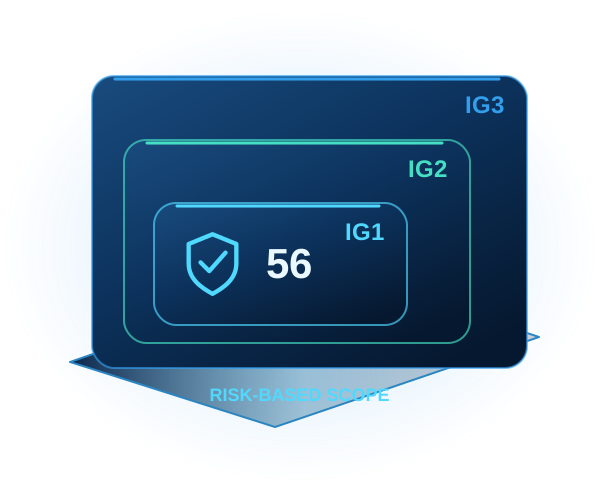
Read the insightUse risk, resources, evidence and ownership—not size alone—to explain the CIS Controls v8.1 scope that fits your organization.
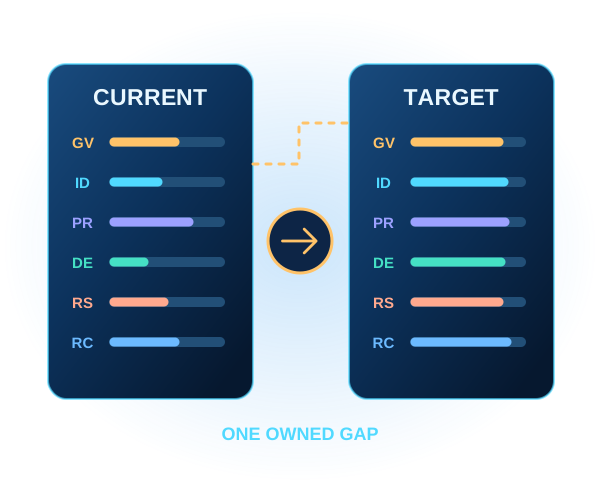
Read the insightUse a current-to-target comparison to describe position, prioritize one meaningful gap and assign ownership without treating the profile as an audit.
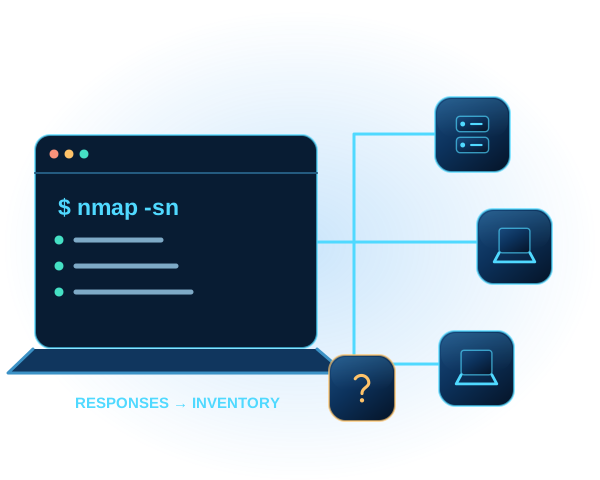
Read the insightShift from “what scanned” to “who owns what responded, why it is exposed, and what action is needed next.”
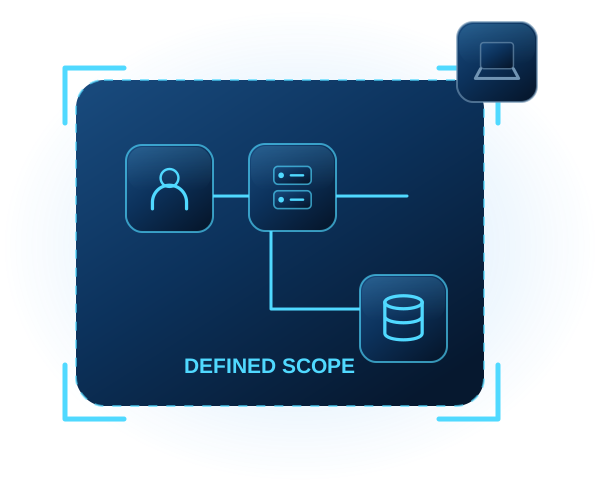
Read the insightDefine scope, potential injury, ownership and evidence before selecting controls from the Canadian baseline.
Read the insightWhat your customer is really asking, which alternatives are commonly accepted, and what certification commits you to.
Read the insightWhere smaller organizations should start, how to sequence the work, and one question that verifies each control.
Read the insightConnect technical evidence to clearer decisions and practical capability.
Read the insightConnect relevant risk, realistic exposure, improvement choices, leadership decisions and team capability.
Read the insightMap inputs, context, identity, tools, outputs and oversight before an AI-enabled feature launches.
Read the insightThese activities answer different assurance questions. Understand their strengths, limits and appropriate sequence.
Read the insightA cautious reading of one bounded finding, plus five questions for reviewing security learning in real work.
Read the insightWebsite categories organize reader problems. LinkedIn series and video formats remain distribution labels rather than becoming a maze of website sections.
Governance, prioritization, resilience and security decisions for organizational leaders.
Trust boundaries and secure design across cloud, application, network, identity and AI systems.
Assessment scope, vulnerability management, penetration testing and defensible evidence.
Awareness, practical learning, reporting workflows, remote work and security culture.
Monitoring, response readiness, recovery and the operational context around security tools.
Careful translations of peer-reviewed work and emerging-system questions into practice.
ByteDefender Insights is not an embedded social feed. Long-form articles are original website resources; LinkedIn distils and distributes one useful idea, then invites discussion. Only durable topics that warrant evidence, context and a clear reader decision become website articles.
Start with the decision, scope and evidence your organization needs.